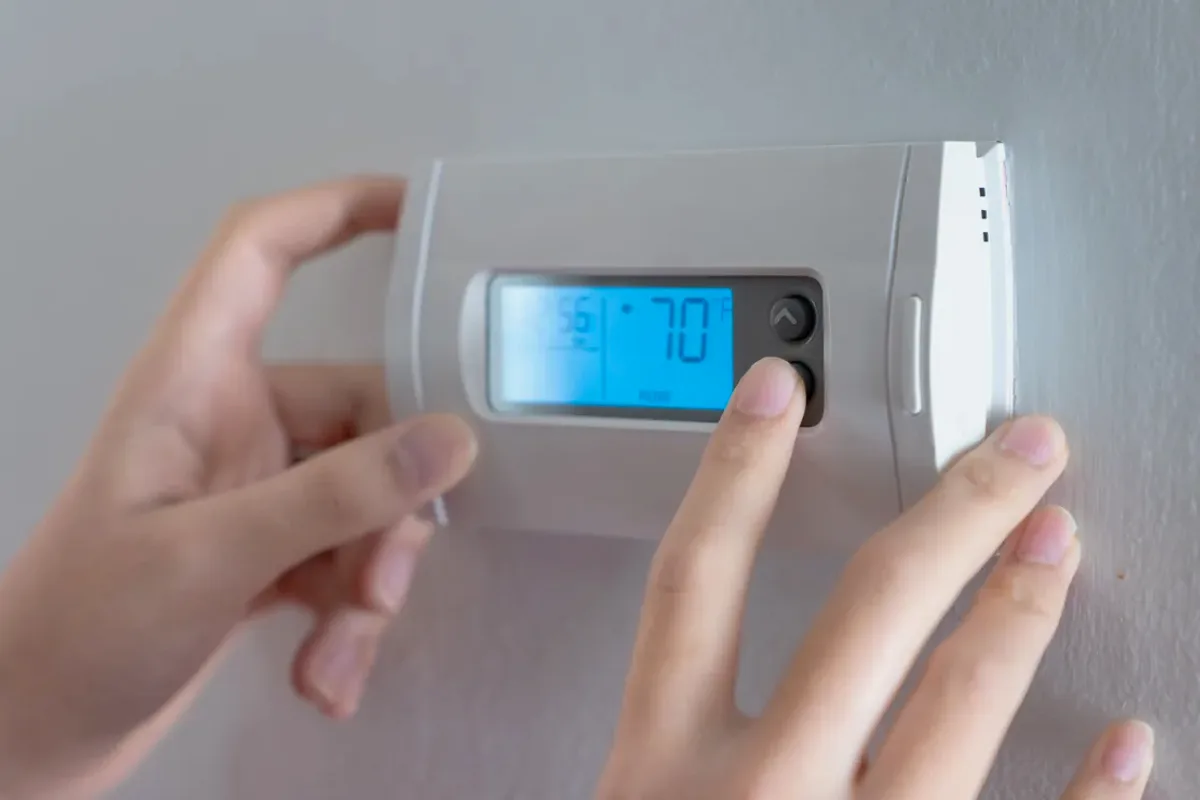
Request thermostat repair & replacement for a property in Georgetown. Include the equipment, the problem or planned work, and your location so the request can be reviewed.
What should be tested before replacing a thermostat that gives incorrect readings or does not control the system?
Thermostat repair or replacement begins by checking whether the control itself is faulty or whether the heating or cooling equipment is not responding for another reason. A blank display, inaccurate reading, continuous operation, or short cycling can involve sensors, wiring, transformer output, or the system control board. The existing thermostat model and HVAC equipment configuration matter when selecting a replacement. Compatibility with system stages and wiring should be confirmed before installation, especially for smart or programmable controls.
Record the thermostat model, displayed temperature, settings, and the equipment's response when a call for heating or cooling is made. Check the wiring arrangement and system stages against the equipment documentation. Transformer output, sensors, and the control board may explain symptoms that resemble thermostat failure. These comparisons help distinguish a repairable connection or component fault from a genuinely incompatible or defective thermostat.
Thermostat power, wiring, sensor, transformer, and control-board diagnosis
Temperature reading and calibration assessment
Programmable and smart thermostat compatibility with HVAC stages
Assessment and Scope
Questions for the Proposed Work
01
Find the cause before replacing the control
A blank screen can reflect a thermostat fault, loss of power, wiring trouble, or a transformer issue. Constant running and short cycling can also originate at the HVAC equipment or its control board. Diagnosis should compare thermostat signals with equipment response rather than assume the wall control is responsible. This matters because replacing a functioning thermostat will not correct a separate system fault. Do not remove wiring or probe internal electrical components; provide the model and symptom history for assessment.
02
Check readings and calibration
If the thermostat reading differs from the room's observed conditions, first establish whether its location, sensor, or calibration could explain the difference. A sensor problem or placement near a heat source may affect the reading without indicating a furnace fault. Calibration should follow the manufacturer's instructions and the thermostat's capabilities. Compare readings consistently and note when the mismatch occurs; a perceived temperature difference alone does not establish that the control needs replacement.
03
Confirm replacement compatibility
A programmable or smart thermostat should match the heating and cooling equipment, number of stages, wiring, and any required control interface. Some systems need a compatible accessory or different wiring arrangement, so a new display's features do not guarantee it will operate the existing equipment. If the old thermostat cannot support the system's stages or remains inaccurate after appropriate checks, replacement may be appropriate. Confirm settings and equipment response after installation using the product instructions.
Compare the next step
Review retained programs and remote-account settings with the owner before assuming a control failed during the absence. Ask whether the installed equipment responds correctly to the intended occupied settings. Keep clear instructions for seasonal operation, battery care where applicable, and remote access ownership.
Thermostat wiring is not universal. Do not connect wires by colour alone or work on energized wiring; a compatible control must be configured for the equipment it serves.