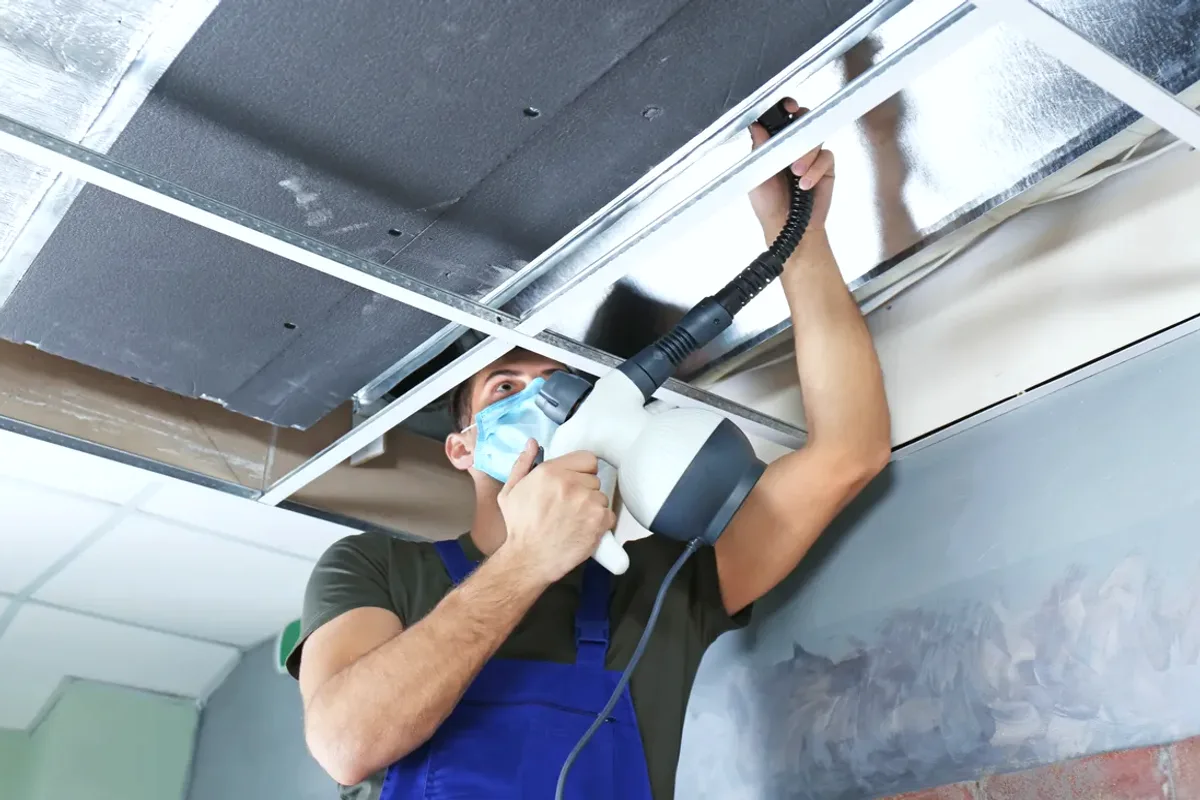
Request duct cleaning for a property in Georgetown. Include the equipment, the problem or planned work, and your location so the request can be reviewed.
What findings indicate that duct cleaning is appropriate rather than routine or unnecessary?
Duct cleaning is most useful to assess when there is visible accumulation, construction debris, evidence of material entering the system, or a specific airflow concern. Dust at a vent alone does not establish that the full duct system needs cleaning. The inspection should identify which duct sections and air-handler components are accessible and whether the observed material is loose debris or another condition requiring separate evaluation. Cleaning does not by itself repair leaks, correct system design, or guarantee changes to indoor air.
The assessment should identify the material present, its location, and whether it is inside the duct, at a register, or in an accessible air-handler section. Renovation history and visible debris can help explain accumulation. Check whether airflow concerns instead relate to a restriction, disconnected section, or system issue. This distinction matters because cleaning removes suitable loose material, while damage or leakage requires a separate repair assessment.
Visible duct debris and construction-dust assessment
Airflow concerns, duct leakage, and separate repair findings
Accessible ducts, air-handler sections, and conditional HRV connections
Assessment and Scope
Questions for the Proposed Work
01
Base cleaning on observed material
Visible construction dust or loose debris inside accessible duct sections may support a cleaning scope, especially when its source and extent can be identified. Dust on register faces or household surfaces does not alone demonstrate buildup throughout the duct network. Inspect representative sections and explain what will be cleaned, including whether the blower compartment or other accessible components are included. The findings should guide the work; a fixed calendar interval is not a reason by itself to clean.
02
Separate cleaning from airflow repairs
Weak airflow can result from duct leakage, a closed or obstructed section, a filter or coil restriction, or equipment operation, rather than accumulated dust alone. If an accessible joint appears disconnected or damaged, document it as a separate repair finding instead of implying cleaning will seal it. Where a duct leak may draw dust from a wall or attic space, its location helps explain recurring material. Cleaning and airflow diagnosis address related but distinct questions.
03
Define the accessible system scope
Before work, clarify which supply and return runs are included and whether connected equipment such as an air handler or HRV section is part of the accessible scope. Duct layouts differ, so access points and construction can affect what can be inspected and cleaned. If renovation debris is suspected, identify the affected sections and determine whether other work remains necessary. Manufacturer instructions and inspection findings should guide equipment handling; routine chemical treatment or automatic repeat cleaning is not warranted.
Compare the next step
Separate stale-room odour from evidence of contamination inside the air system. Ask for an inspection of any documented pest or water-entry concern and an explanation of the source. A cleaning scope should identify affected materials and components, with moisture correction or material replacement addressed when needed.
Routine cleaning is not automatically necessary and does not guarantee health or energy benefits. Resolve moisture sources and assess damaged materials rather than treating cleaning as the only remedy.